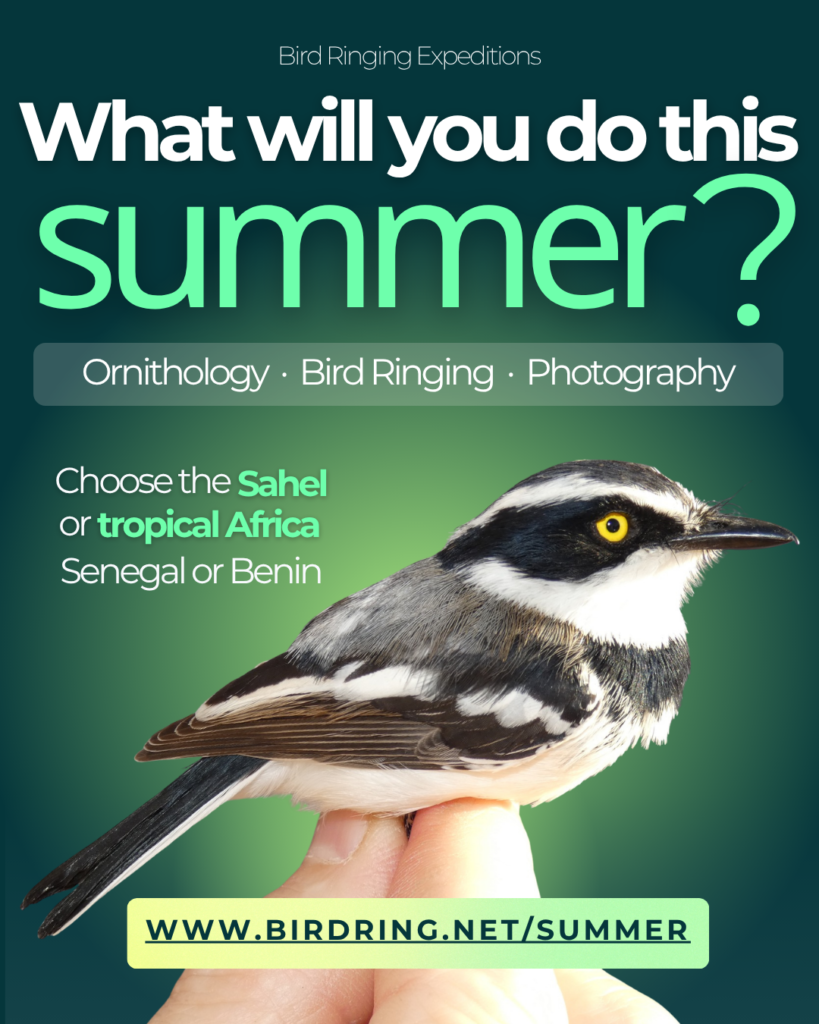
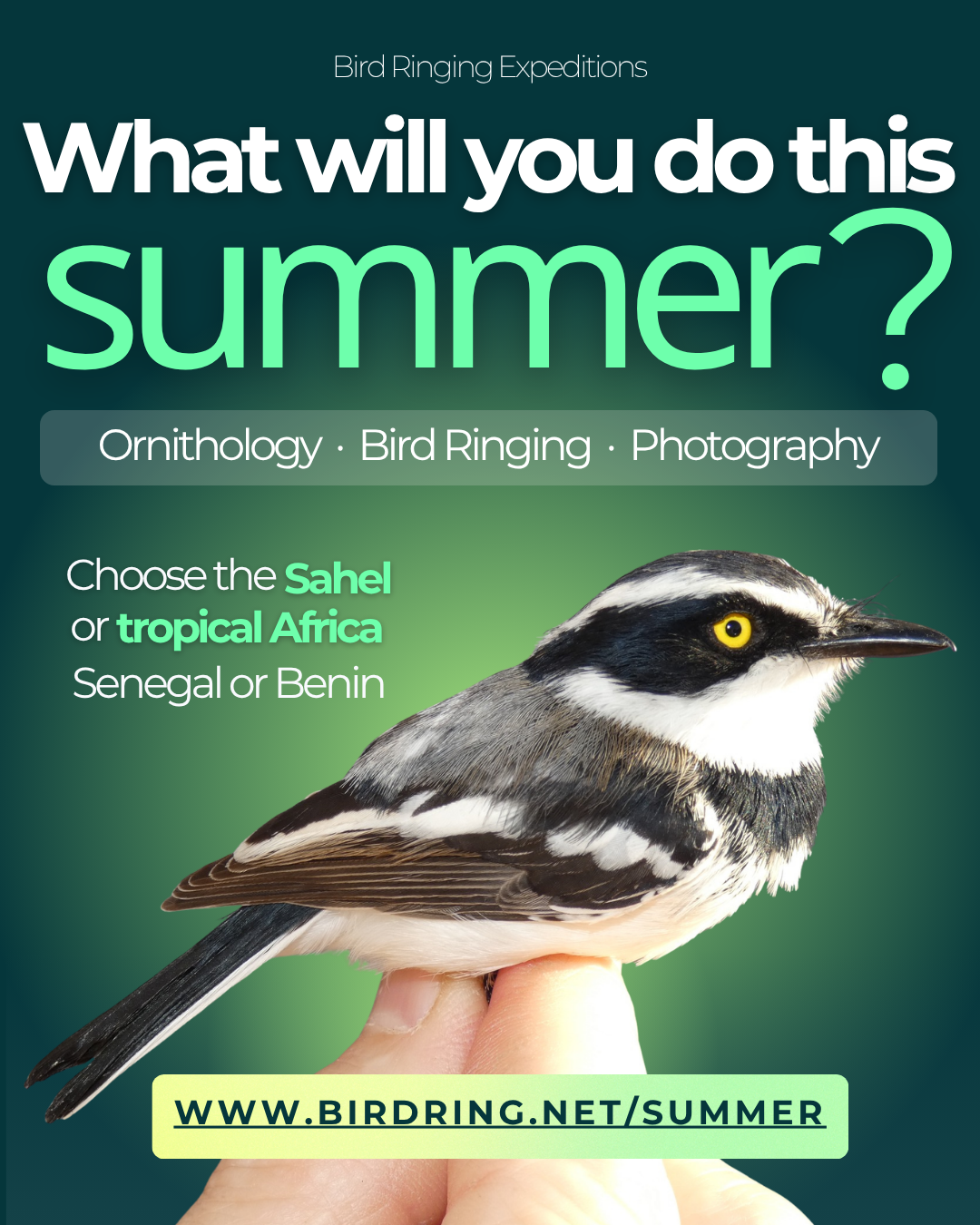
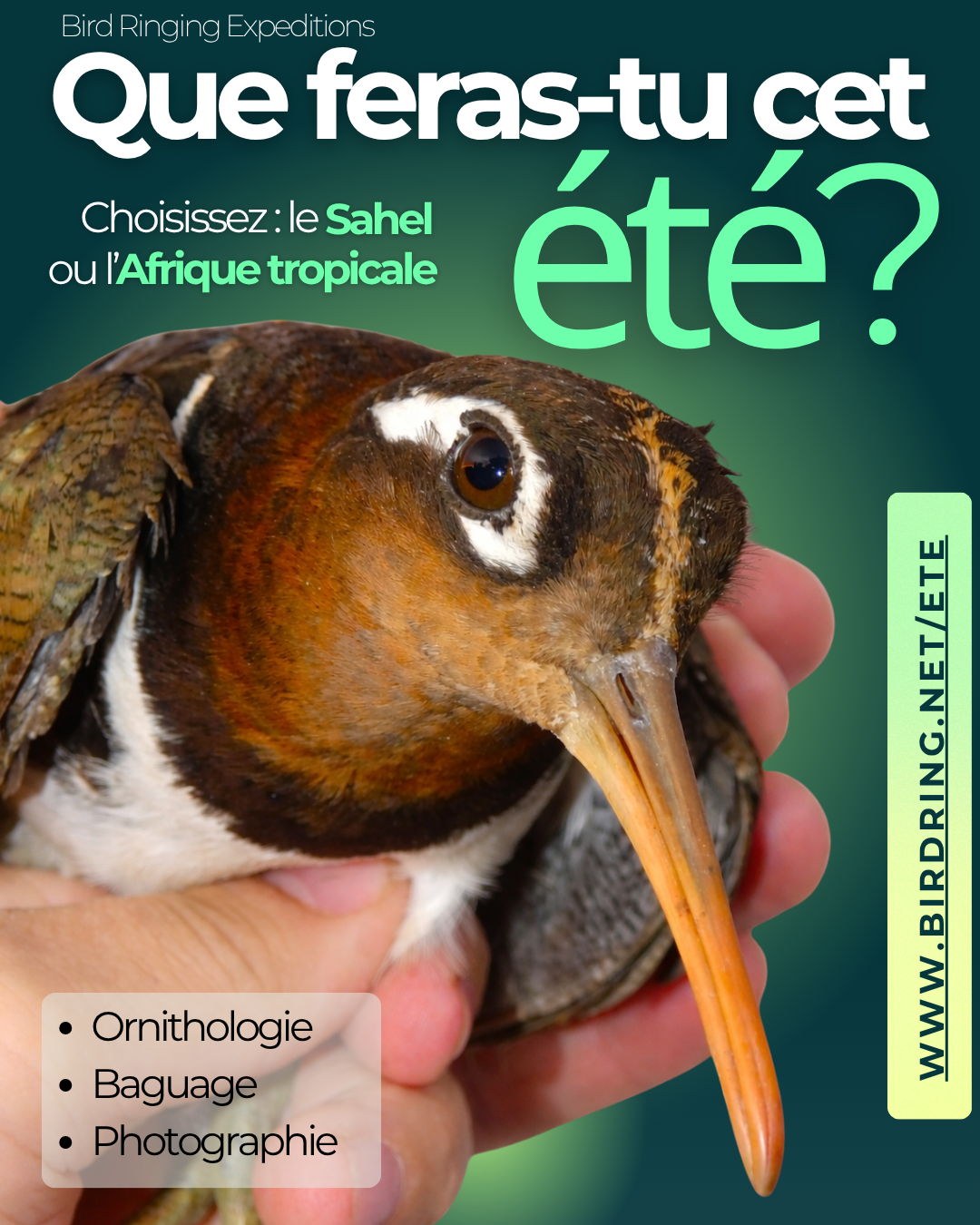
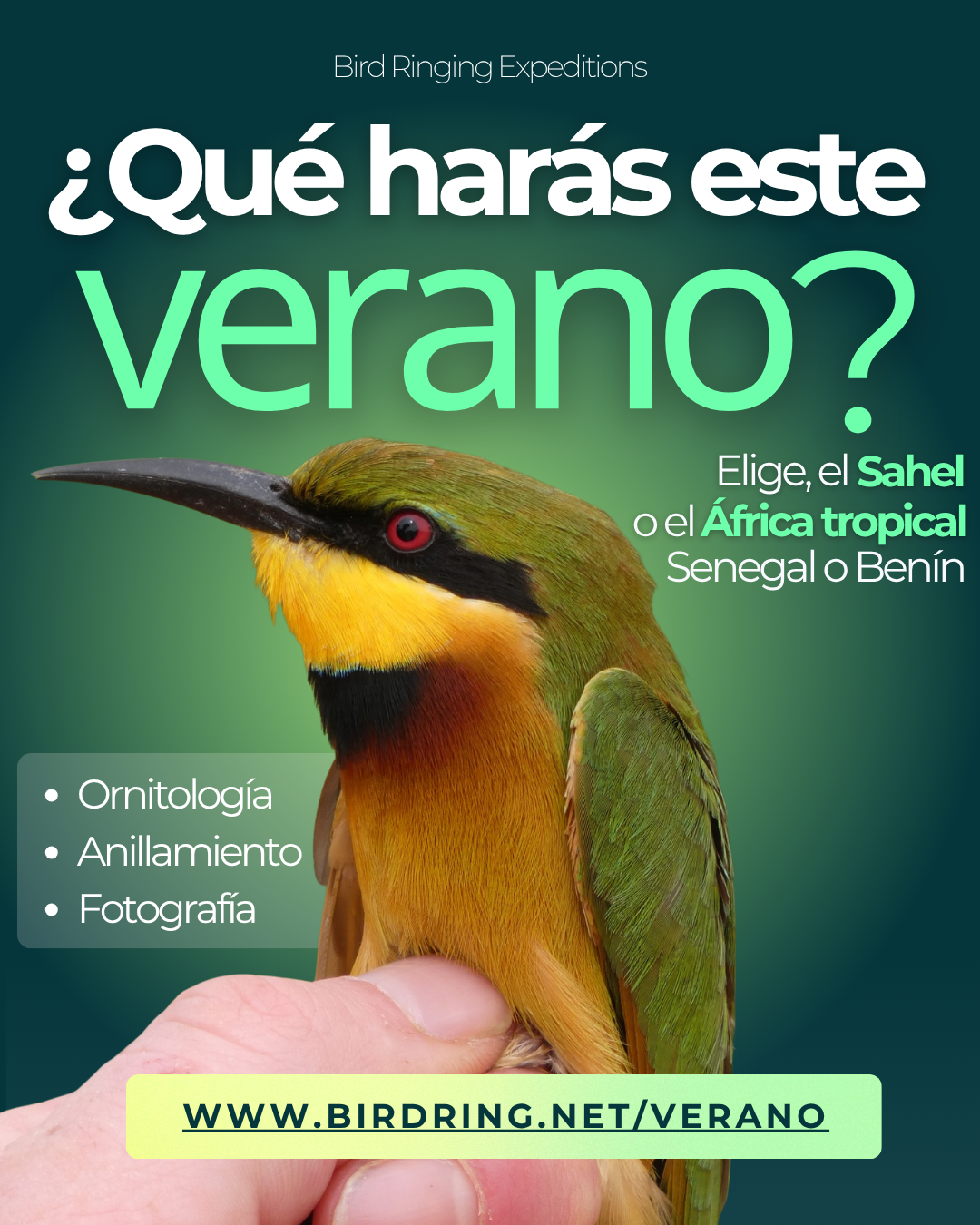
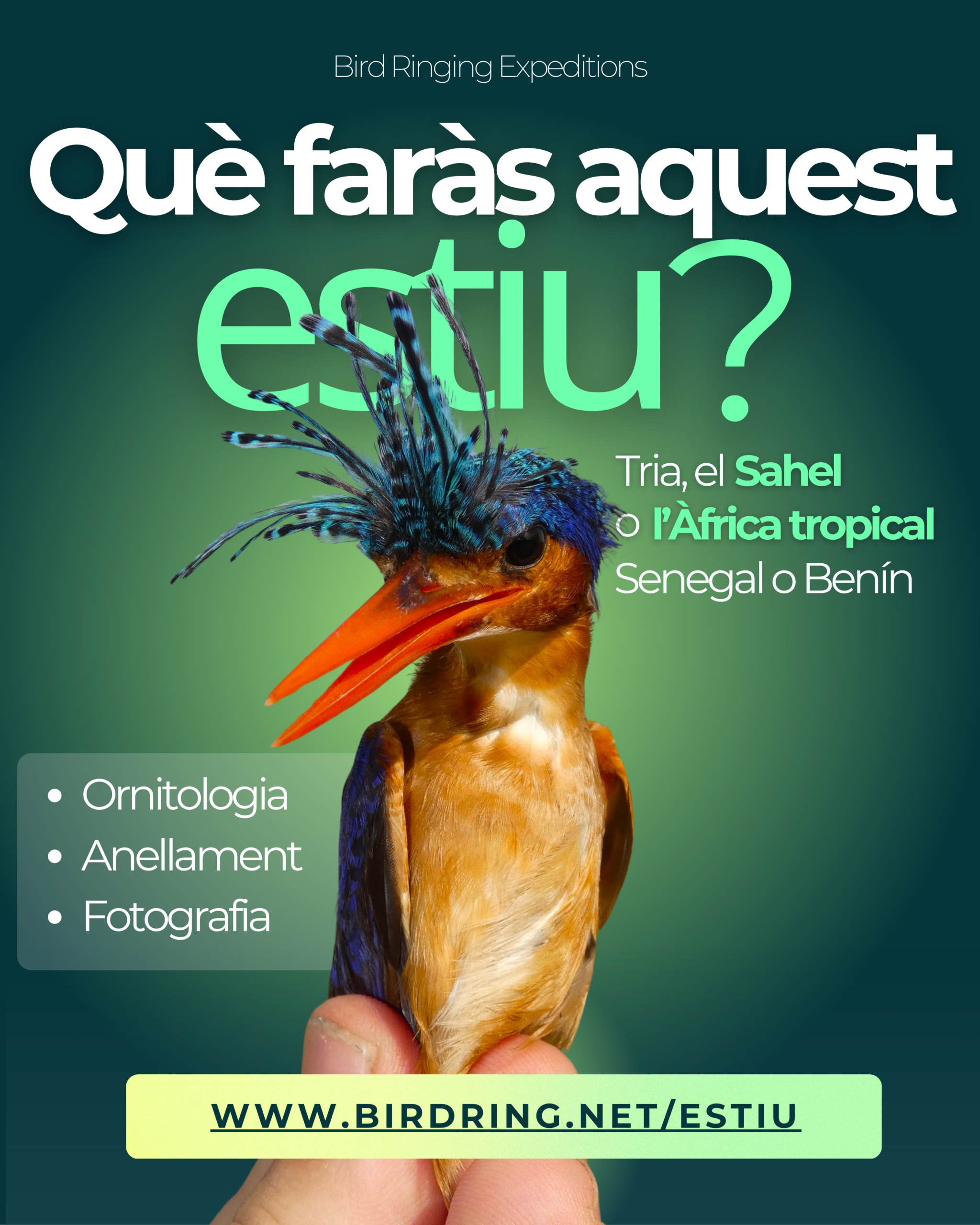
Don’t miss this opportunity! If you’re a bird ringer, ornithologist, photographer, or bird lover, join us this summer. Discover the birds of Africa, the lesser-known regions that desperately need our help. All this will be led by experts with decades of experience there and African ornithologists who are incredibly knowledgeable and passionate about their country.
What will we do?
We won’t stop. We’ll be ringing birds from dawn till dusk, accompanied by our African hosts, who will learn alongside us. You can participate from day one, depending on your experience, or, of course, learn as you go. If you wish, you can take advantage of your stay to participate in ornithology and bird ringing courses, practicing all the time. There will be photographic safaris of birds and wildlife in general, we will visit African ringing stations and we will be able to continuously record and photograph birds in unexplored or very unknown places.
Where? When?
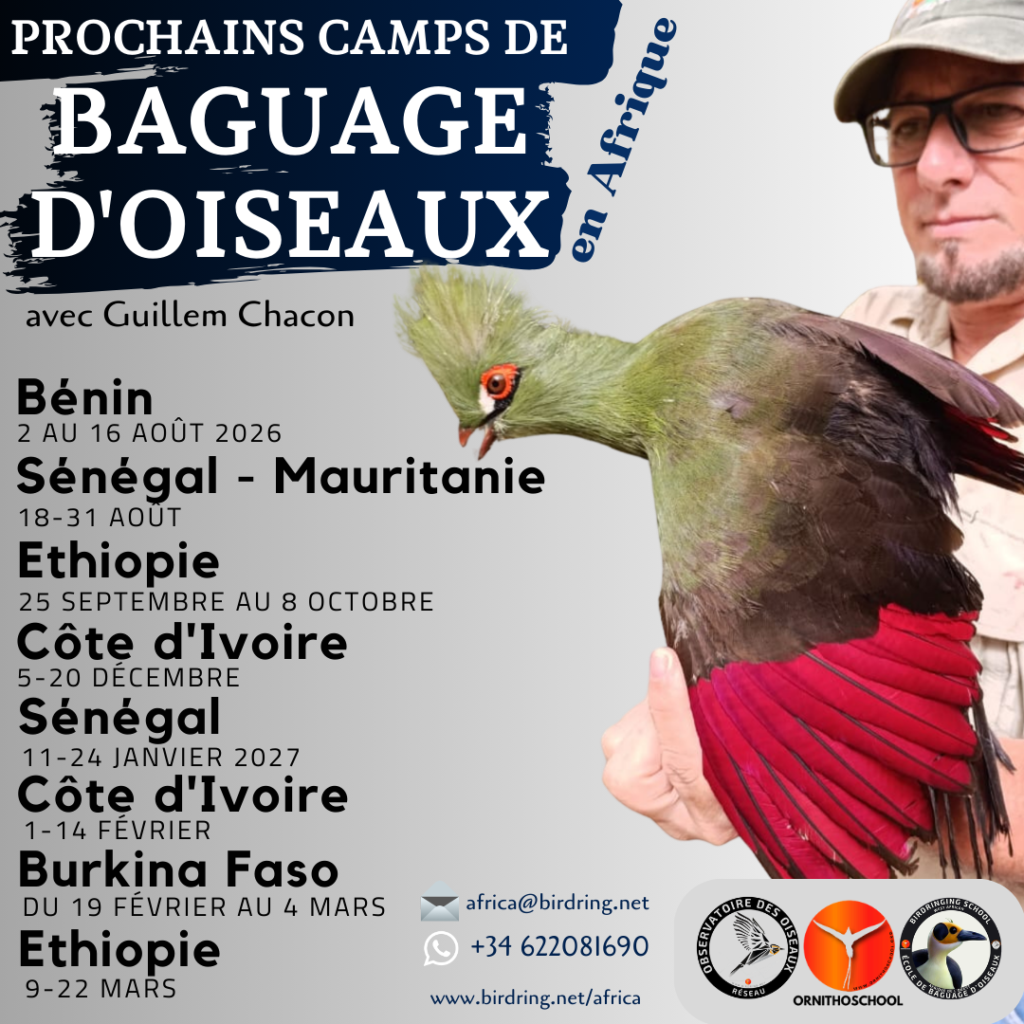
I propose two great experiences in August, at the height of the European to African migration season. Choose:
Benin
Tropical Africa, completely unknown. Last February, the first bird ringing in the country’s history took place, and together with local NGOs and the University of Abomey-Calavi, we created the country’s first ornithological station in the Basse Vallée del Ouémé Biosphere Reserve. It was incredible. Well, now we’re returning from August 2nd to 17th to explore this Biosphere Reserve again, but also new areas and habitats, on a birdwatching safari through the best spots in this welcoming and fascinating country.
Senegal Delta
The largest concentration of migratory birds in Africa. For three years now, we’ve been ringing birds at the only bird ringing station in both Senegal and Mauritania. How is this possible? Well, the Senegal River delta has a Senegalese bank and a Mauritanian bank, forming a Biosphere Reserve. In August, from the 18th to the 31st, we’ll spend a week in the Parc des Oiseaux in Senegal, cross the river, and continue on to Diawling National Park in Mauritania, where—no less—we’ll inaugurate the country’s first ornithological station.
And remember. Make no mistake: We are going to ring, observe, and photograph birds, live with the local people, and help them with their ornithological projects and the conservation of the fauna, habitats, and ethnic groups that live there. In short, we’re going to enjoy helping.
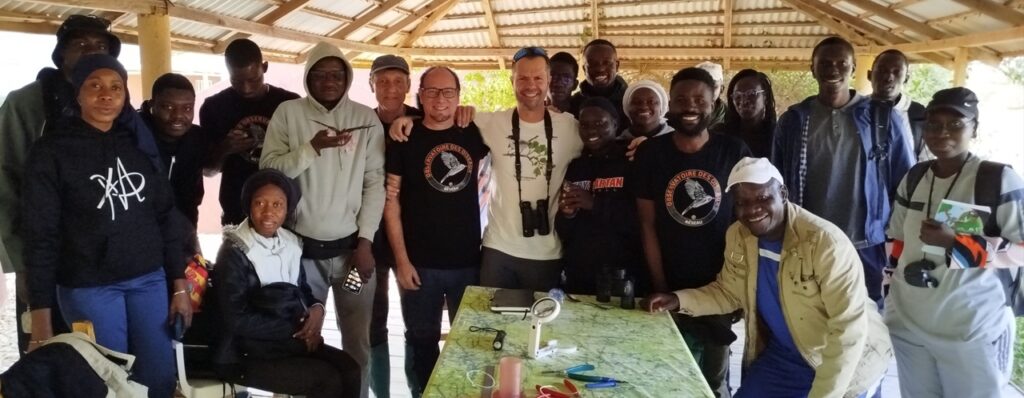
With the young ornithologists in Senegal
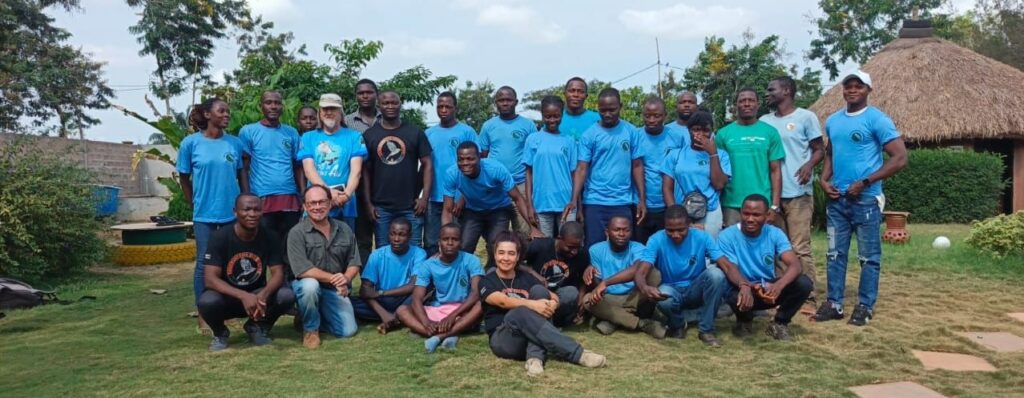
And the first ornithologists from Benin, who will be with us
A curiosity
The top experts always asked me how many species I had ringed. And I had no idea. Bored during a year of chemotherapy, I counted them. And, oh, surprise! There are about 1,300. So I’m the person in the world who has ringed the most bird species. And there is still no tropical expedition where I don’t get excited about a new species.
A very brief intro
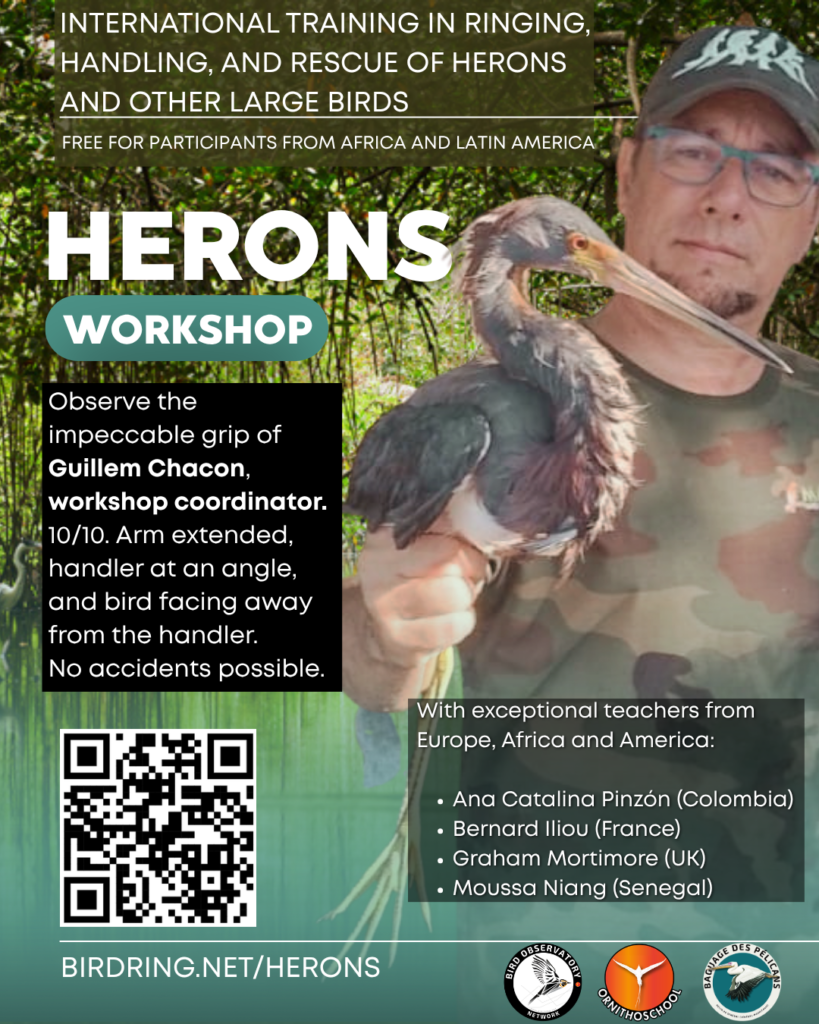
I’m Guillem Chacon. This year marks 45 years since I began ringing birds. First in Europe, of course. After learning from the best, I spent 10 years ringing in the Llobregat Delta (Barcelona) and then for 15 years interspersed with other nature reserves in Catalonia. Also, of course, around the Mediterranean basin. But 39 years ago I started venturing into the tropics, and for the last few decades I’ve lived permanently in the tropical belt, traveling from country to country, mainly in the Neotropics and sub-Saharan Africa, ringing about 280 days a year with ringers from every continent.
I help establish ornithological stations in what are called “developing countries.” Twenty-nine have already been created. With a group of friends and colleagues from various countries, we train local ornithologists, provide them with equipment, and return regularly to monitor their progress.
But I also have my own bird ringing stations where I go continuously, to the country with the greatest biodiversity of birds in the world, Colombia, and to the place in the world with the greatest diversity of birds, Manu, in Cusco, Peru. With nearly 1,100 species in a single location. Yes, I’m not kidding.
In Senegal and Mauritania, I coordinate the ringing station in the Senegal Delta, the most important stopover point for European birds migrating to Africa, right in the heart of the Sahel. You can find me there from August to March, two weeks each month.
Not traveling this year? Plan for next year! Peru, Uganda, Madagascar, and much more:
At the Manu Bird Observatory with a common but incredibly beautiful species: Paradise Tanager (Tangara chilensis)
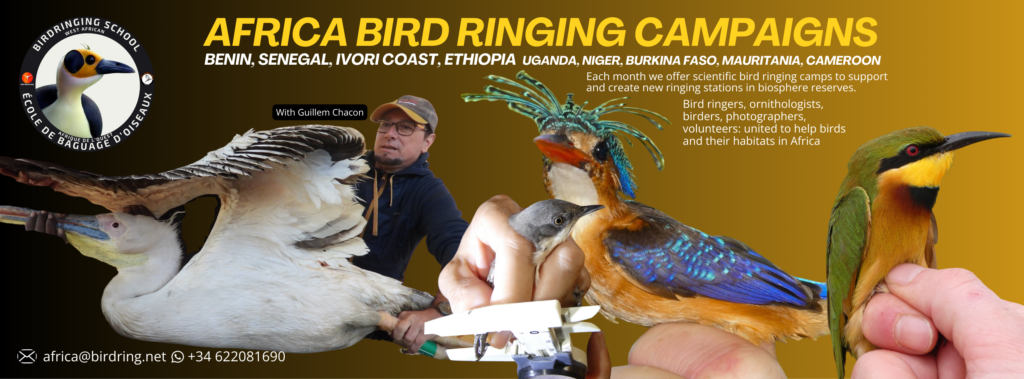
Every month we hold a bird ringing camp in a different country. The goal is to help create ornithological stations for the country’s ornithologists, supported by national parks and biosphere reserves, universities and reference entities and, of course, in conjunction with the relevant national administration. On our expeditions, we equip the new stations with all the necessary equipment and materials and provide scholarships for their leaders, including training camps (in addition to accommodation, meals, and transportation). We always travel to train bird ringing instructors, trainers, and evaluators from various countries in Europe and the Americas.
Upcoming Expeditions
Bird Ringing
August 3-11
Benin
Lower Ouémé Valley Biosphere Reserve
Internships and Projects
Are you looking for a unique experience for your Final Year Project (FYP), Master’s degree, internship, research, etc.? Join our program at a biological station located in the heart of the tropics and transform your project into a true scientific adventure, with real impact and genuine personal and professional growth for you.
research
Do you want to learn or improve your experience?
If you’re training to be a bird ringer, there’s nothing better than the experience you’ll gain from ringing tropical birds. Compared to any place in Europe, it multiplies by at least four the diversity of birds that will pass through your hands these days (well, by 8 or 10 in Colombia or Peru!). Learn from the most experienced European ringers working in the tropics, as well as from the host ringers themselves, how to properly handle complex or large birds, such as parrots, toucans, or hornbills, and, of course, the tiniest ones. If you decide to join us in the American tropics, you’ll ring a wide variety of hummingbirds. But wherever you go, you will make an exponential leap in your knowledge and experience.